Lupe Fiasco's Food & Liquor, 20 Years Later (VMP Liner Notes republish)

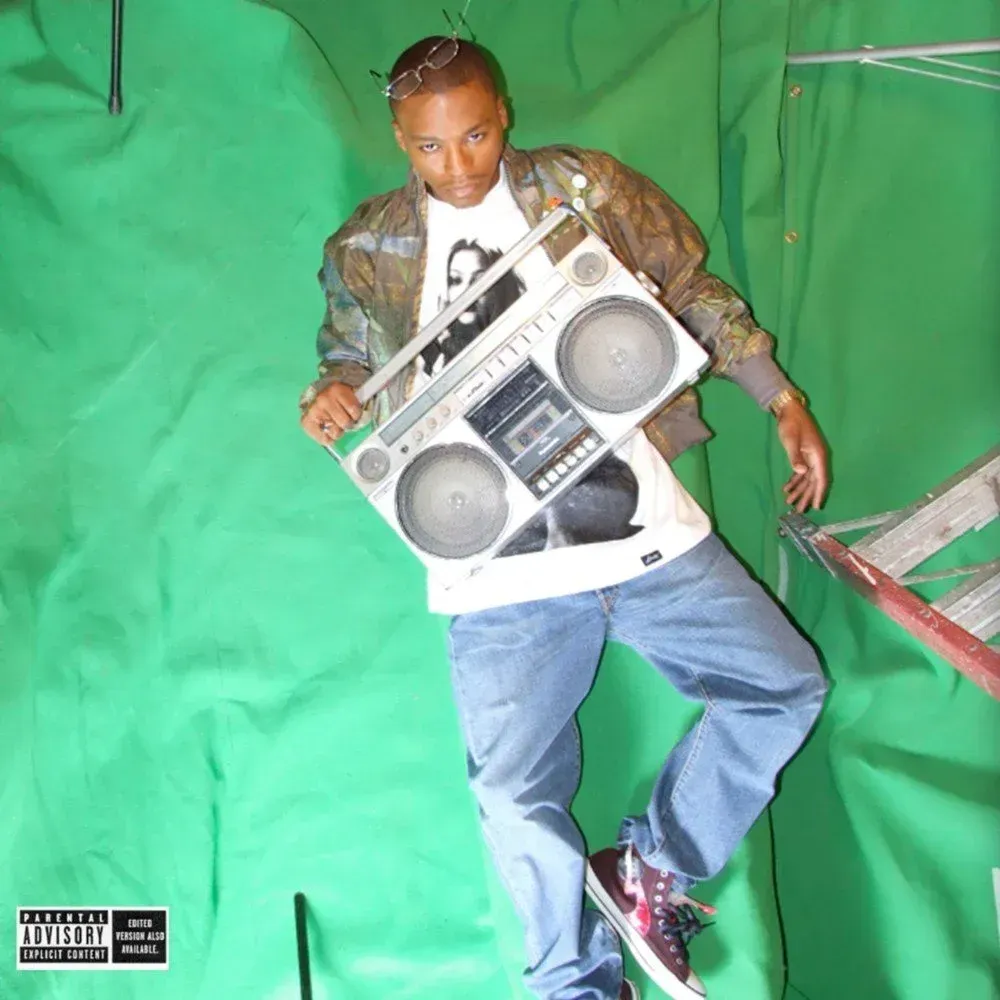
Lupe Fiasco released his debut solo single “Kick, Push” on April 18, 2006, and almost immediately caught flack from the skateboarding community it depicted. Plenty of skateboarders the world over, particularly Black ones, felt seen by the details of Lupe’s story: the rattle of trucks on handrails driving family members crazy, creating foundations for platonic and romantic love through a shared zeal for aerials and varials. Producer Soundtrakk's beat, made of triumphant horns and strings sampled from Filipina singer Celeste Legaspi's "Bolero Medley," give it the gilded sheen of a precious memory. But despite the song’s lived-in appeal, Lupe was an amateur skater at best and a handful of hardcore and professional boarders pressed him for false claiming.
Terry Kennedy, then a captain of mutual friend and musician Pharrell Williams’s Ice Cream skateboarding team, reportedly confronted Lupe outside of one of his sessions with Pharrell shortly after “Kick, Push” was released. The duo got into a screaming match so intense, it had to be broken up by Pharrell’s security. But Lupe wasn’t throwing down a gauntlet, at least not at the feet of the Ice Creamers. It wasn’t even supposed to be his debut single: it was originally created for a skate DVD sold by Uprise, a local skate shop in his native Chicago and, as he told Skee Live in 2014, it just took on a life of its own.
Whether he lived and died in Spitfire shirts and SB Dunks or not, “Kick, Push” combined Lupe’s emerging pop and hip-hop sensibilities with the then-outsider culture of skating as a metaphor to show how a hobby could bring color to the dreary, creaking confines of the ‘hood: “I always put myself as a storyteller first,” he told Entertainment Weekly in 2008. “I talk about the same concepts as Young Jeezy, but I deglamorize it and put it on a cinematic level that leaves it open to interpretation on more levels than [just saying], ”I’m selling dope. This is what it is.” It has pieces of me, but it also has pieces of you, pieces of him, pieces of her…. So in essence, the story is of all of us.”
“Kick, Push,” also offered a potent panoramic view of everything Lupe was capable of as a rapper, which is ironic because, due to his upbringing, he didn’t start out as a fan of hip-hop. Born Wasalu Muhammad Jaco in 1982, Lupe grew up Muslim on the west side of Chicago and was raised by Shirley Jaco, a gourmet chef, and Gregory Jaco, a former military man and member of the Black Panther Party who worked as an operating plant engineer, held eight black belts in different martial arts, and owned several karate dojos and army surplus stores across the city. Though he grew up in one of Chicago’s worst areas—”the ‘hood ‘hood, the real ‘hood,” as he told Ebony Magazine in 2006—both of Lupe’s parents put a strong emphasis on education, both cultural and academic, even after they divorced when Lupe turned five.
There was no cable at home, so he watched a lot of public access television and would read the encyclopedias and National Geographics his mother had lying around. As a child, he’d spend days with his mother—who first began calling him Lu, an abbreviated version of his first name he would later expand—and afternoons and evenings with his father, who introduced him to the music of N.W.A. and Ravi Shankar, taught him how to use firearms, and would expose him to as many multicultural hubs as he could find throughout Chicago. Musically, Lupe was more interested in classical composers like Tchaikovsky and jazz clarinetist Benny Goodman than in rap at this time, broadly claiming it was too vulgar and misogynistic.
This mentally and physically nutritious upbringing was sharply contrasted by Lupe’s surroundings. Sheryl lived in the Madison Terrace housing projects and, after their divorce, Gregory moved to Harvey, a city within Cook County in Illinois. Lupe spent his early life surrounded by things most people only heard about in songs: gangbanging, prostitution, drug-dealing, unending gun violence. When he first moved in with his father at age 14, Lupe’s neighbors were running a crack house and attempting to expand their operation. Gregory showed up at their house with a gun, with Lupe providing air support from a window at the top of their house, and ordered them to leave. “I was 13 or 14 and to see that, a lot of the facade and the upkeep [of trying] to impress people was eliminated very early for me,” he told Entertainment Weekly in 2008. Through his parents’ tutelage and some good ol’ fashioned street smarts, Lupe learned early on the importance of staying true to self.
For all his scholastic achievements—on top of all the activities and culture he was absorbing, he also did academic decathalons in school—one thing Lupe could never master was playing an instrument. Poetry came easier to him and he picked it up quickly, filling notebooks with rhymes and eventually taking to rapping by the eighth grade. Older and now able to understand the nuances of the music he used to despise, Lupe began mainlining rap from 8Ball & MJG and Bone-Thugs-N-Harmony to Ice Cube. By high school, he was particularly inspired by two pillars of New York hip-hop released in 1996: Nas’ sophomore album It Was Written and JAY-Z’s solo debut Reasonable Doubt.
Alongside a friend from school who gangbanged under the name Bishop G, he began recording his first songs in his father’s basement. Gregory took Lupe and Bishop to thrift stores to find vintage recording equipment to help them get set up. They didn’t have access to any original beats, so they wrote and recorded to old JAY-Z and The Lox songs. Before they knew it, Lupe and Bishop had a handful of mixtapes and created a small buzz for themselves at school, which fizzled out when they were booed offstage during a talent show. To add insult to injury, many of Lupe’s early raps were, ironically, about gun violence and the macho posturing he rallied against as a child.
None of this stopped Lupe from continuing to pursue music. By the time he was a senior in high school, he was already being scouted by producers affiliated with Dr. Dre’s Aftermath Entertainment, including part-time manager Charles “Chilly” Patton, who would become a mentor to Lupe. It was Chilly who introduced Lupe to the rappers Nahvee, D-Low, and Butcher, who would briefly join forces as the group Da Pak. They gained some notoriety and signed with Epic Records in 2000, only releasing one single, called “Armpits,” before splitting up. “Armpits” shows early signs of Lupe’s elastic flow and a vocabulary that ping-ponged between Encyclopedia Brown and California gangsta rapper Spice 1. In other words, he sounded in his element, but he still felt like he was compromising his morals. "We had a song out about cocaine, guns, and women, and I would go to a record store and look at it and think, ‘What are you doing?’,” he told The Daily Orange in 2012.
And so he went back to the drawing board, coming away with “Coulda Been,” a song that lays out every life and career path he could’ve taken aside from rapping. His imagination and keen eye truly began to bloom here, with him imagining being a real estate agent, a roller blader, and even a worker holding up lines at the DMV. It’s a melancholy brand of humor and storytelling told over an airy beat, and Lupe’s flow left nothing up for debate: “I’d probably be flippin’ a burger/attemptin’ a murder, paralyzed, sippin’ on Gerber.” The song was released as a demo but grew off of word-of-mouth, getting picked up by MTV and leading Lupe to sign a solo deal with Arista Records. Though then-CEO L.A. Reid was a fan, it wouldn’t be long before Reid was fired and Lupe was cast aside yet again. But behind the scenes, Lupe was bubbling. His idol JAY-Z had offered him $50K to sign to Roc-A-Fella Records in 2002, which he and Chilly declined in favor of starting their own label, 1st and 15th Entertainment. Jay was also in the process of potentially becoming CEO of Atlantic Records, where Mark Pitts, Lupe’s A&R at Arista, was also planning on heading. So the whole gang pulled up stakes and made the move.
Meanwhile, Lupe was also working on and off with a fellow scrappy Chicagoan named Kanye West. They first met in 2000 while Kanye was working on Philadelphia rapper and Roc-A-Fella affiliate Beanie Sigel’s debut album The Truth. They worked together occasionally as West’s star rose off the strength of his 2004 debut album The College Dropout. In 2005, Lupe released a remix of “Diamonds From Sierra Leone,” a single from West’s sophomore album Late Registration, called “Conflict Diamonds” on his mixtape Farenheit 1/15 Part II: Revenge of The Nerds. Kanye was so impressed, he asked Lupe to add a verse to his next single “Touch The Sky.” Lupe was ambivalent toward the song at first and needed some convincing, but he did the verse, which mixed references to Thundercats and Lupin The 3rd with his status as a newcomer (“Peachfuzz buzz but beard on the verge.”) That verse got Jay’s attention, leading to an agreement between the two that he would be an executive producer for Lupe’s debut album, Lupe Fiasco’s Food & Liquor.
The tenants of his Muslim background, his unstable upbringing, and his unabashedly nerdy sensibilities fueled the dichotomy at the album’s center. So-called food and liquor stores are common in Chicago the way bodegas are in New York and Lupe saw these elements as opposing forces, the essential and necessary (food) clashing with the excessive and indulgent (liquor). He makes this clear on “Intro” where, after a poem read by his sister Ayesha Jaco, he begins the song with an Arabic prayer (“A'uzu billahi min ash shaitani r rajimi/Bismi 'llahi 'r-rahmani 'r-rahim”), which translates to “I seek protection from Allah against the Devil/In the name of Allah, most merciful, most kind.” Producer Prolyfic’s lush strings and bass hits rumble underneath Lupe’s explanation of the album’s concept, a fanfare befitting an artist with co-signs from two of the biggest rappers on Earth before he even dropped a studio album.
“Intro” sets the tone in grand fashion, but Lupe is far from done clearing his throat. The second and third tracks, “Real” and “Just Might Be OK,” respectively, lay out Lupe’s mission statement. “Real” delves into his thoughts on the responsibility he has as a rapper to his audience, delivering positive messages and redistributing his newfound wealth. “OK” starts out as self-congratulation for getting the album done in the first place before detailing his origin story. Across the song, Lupe directly addresses “the Satan on my shoulder” tempting him to the dark side, which results in him trading, as he puts it, “his kufi for a New Era.” It seems at first that he might be giving up on his faith and intelligence like he did back in the day in pursuit of rap, but he finds sly ways to incorporate them into his lyrics: “I don't foretell best/I ain't nicest MC, I ain't Cornel West/I am Cornel Westside, Chi-town Guevara/Malcolm exorcise the demons, gangsta leaning.” The raps are tight, with multiple flow switch-ups and neatly folded references to Habitat for Humanity and old G.I Joe slogans helping to assure listeners that no matter what rap has done to your favorites before, Lupe will survive.
And he was ready to thrive on his own terms. By 2006, hip-hop was in the midst of the ringtone rap era, where the airwaves and text tones were dominated by the intoxicating melodies (and dances) of artists like Soulja Boy and Dem Franchize Boys. Conversely, so-called “conscious” hip-hop’s presence on the charts was decreasing, with only a few exceptions, like West and fellow Chicagoan Common, reaping mainstream benefit. Lupe had proven time and again that he was capable of making music that boiled down to just dope raps over dope beats, but Food & Liquor fully embraced his high-minded concepts and messages on top of being a fun, breezy hip-hop record.
The struggle between good and evil was the album’s theme, and each song approached it by crafting its own world for Lupe to probe and extrapolate meaning. His keen eye for storytelling and people-watching manifests in flashes: in the man who cheats on his partner because “he wanted the rush” (“Real”); in the little boy walking down a dark path because of a neglectful father (“He Say She Say”); in the man trapped and bound to the addictive pull of television and early versions of social media (“The Instrumental”). These message tracks come from real places, which negates most of the corniness and preachy treacle that might turn the average rap fan off of that kind of song.
It isn’t just the stories, either. Lupe’s writing has a sympathy to it that goes a long way toward helping songs not devolve into lectures. “He Say She Say” handles this simply by having its two verses be virtually identical aside from swapping out the pronouns in both to show perspective. The first verse is told from the POV of a concerned mother admonishing an absentee father (“It's making a hole; you've been digging it/'cause you ain't been kicking it/since he was old enough to hold bottles”); the second verse is told from the son’s perspective, every “his” and “he” switched with a “me” or “I” to further drive the point home: “I'm starting to harbor/Cool on food for thought, but for you, I'm a starver.”
Late album highlight “American Terrorist” takes this idea to a political extreme, focusing attention on how perception can make the difference between someone being impassioned and being a criminal. While Lupe finds ways to sympathize with the Ku Klux Klan member who “can’t burn his cross ‘cause he can’t afford the gasoline,” he doesn’t shy away from how they benefit from veiled and unveiled racism: “If a Muslim woman strapped with a bomb on a bus/With the seconds running give you the jitters/Just imagine an American-based Christian organization/Planning to poison water supplies to bring the Second Coming quicker.” “Kick, Push II,” the sequel to the album’s biggest hit, further paints the depressing situations and surroundings that led its star-crossed lovers to pick up skating in the first place. Lupe’s anger and frustration at the idea of of disenfranchisement is played from an understanding but no less critical angle.
Sometimes, he trapses into autobiography, like elaborating on how Too $hort made him laugh at the word “bitch” like a hypocrite on “Hurt Me Soul.” Other times, he looks directly into the camera to confront the state of hip-hop and his community, with varied and bizarre results. “Daydreamin’” starts off with a story about Lupe surveying the ghetto from inside of a robot before skewering the excess of rap videos. By the end of the second verse, he admits that, although he can see the puppet strings, he’s no better than anyone else because he enjoys it all the same.
He isn’t the first to do so—groups like De La Soul and Little Brother had him beat by years—but he was closer in proximity to artists partaking in the very ills he criticized. And nearly as often, he proves he can boast and bend language just as well as any of them. His fun-loving side is most evident on tracks like “I Gotcha” and “Pressure,” where he flexes about his life and style in the most Lupe ways imaginable. On the Neptunes-produced “I Gotcha,” he’s hotter than tempura flakes while his haters stink like Pepé Le Pew. “Pressure” sees him go up against Jay and come away with all the quotables, the best being an extended bit about him guessing the tricks of the drug trade through common sense and an extended reference to the game show Wheel of Fortune. Like every other song on the album, it was dense and reference-heavy but charismatic all the same. And while Food & Liquor occasionally threatens to spill over into hifalutin worldbuilding — “The Cool” is a song about an undead drug dealer who rises from the grave to revisit his old stomping grounds (really) — he made being smart in hip-hop look as effortless and fly as the gaudiest gold chain.
The album showed every side of Lupe. He was a pop rapper who could flow over orchestral boom-bap, a backpack rapper who could drop triple entendres over Neptunes synths, and an alt-rock kid ready to rhyme over guitars from Linkin Park affiliate Mike Shinoda, but the version available in stores went through some serious growing pains. Two-and-a-half months before its original release date, the original version leaked online. This pushed it back from an early April release to a late September release, and inspired Lupe to record or unearth 10 new songs for retail. On top of that, the week after it hit stores on September 19, 2006, Billboard misreported its first-week sales, claiming it debuted at number 12 on the Billboard 200 when it actually debuted at number eight. Nothing mindblowing, but a top 10 debut for basically a brand-new artist proved Lupe had a wider appeal than anyone at Atlantic could’ve realized.
There was no other rapper like Lupe Fiasco making this much of a splash in the mainstream in 2006. Here was this bookish kid from the ‘hood who could rap circles around Jay-Z and had the gall to pose with a Nintendo DS, a copy of the Quran, and a toy robot on the cover for his debut. He may have been an anachronism in his time, but looking back, it’s easy to see how he laid the groundwork for other high-minded emcees with crossover potential. The skateboarding misfits of Odd Future most likely don’t blow without the effect of “Kick, Push.” Kendrick Lamar and J. Cole’s career paths look vastly different, even nonexistent, without Lupe offering the recipe to deliver the spoonful of sugar to help the Real Hip-Hop medicine go down. Lupe’s later work is still technically sharp but much more ambitious and unwieldy — 2018’s Drogas Wave partially revolves around a group of enslaved Africans who learn to breathe underwater and sink slaveships. But Food & Liquor remains the most potent and well-balanced of Lupe’s work, a case of the corner boy and the scholar living in an otherworldly talented rapper’s brain working in harmony.